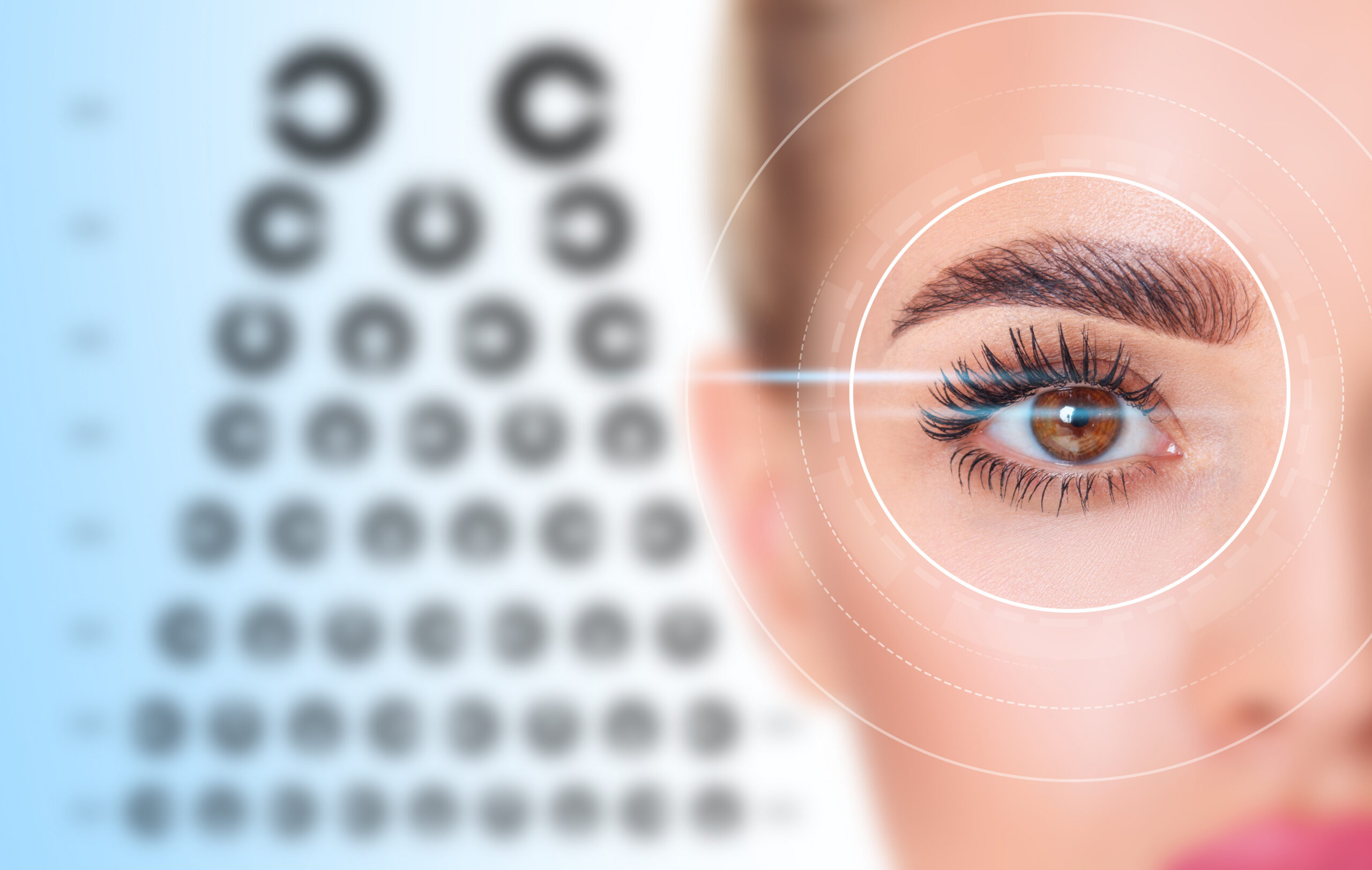
“Results” after LASIK is not a single moment. There is what you notice the first morning, what settles over the following months, and what happens to your eyes as they age regardless of surgery. Knowing which is which helps you judge your own recovery and ask better questions at your follow-up visits. Below are the questions patients ask most about LASIK results, answered in the order they tend to come up.
What Will I Notice the Morning After?
Right after surgery your eyes may feel sensitive and watery, with a slight gritty or burning sensation, and your vision may be blurry for a while. For most patients that blur starts to clear within a few days. Many people return to their normal schedule within about a day, and our team sees you for a follow-up a few days after surgery to confirm that your eyes are healing correctly.
Early on, it is common to notice glare, halos or starbursts around lights, especially at night. These effects usually fade as healing continues. Using your prescribed drops on schedule and avoiding eye rubbing both support this early stage.
How Long Until My Vision Settles?
Healing continues well after you are back to your routine. Vision often improves noticeably in the first weeks and then keeps refining while the cornea finishes healing, a process that takes a few months. Your follow-up visits are how that progress is measured, so it is worth keeping every one of them even when your vision already feels sharp.
When Dryness Slows Things Down
Dry eye is common after LASIK and can temporarily blur or soften vision while the surface of the eye recovers. If it lingers, our dry eye treatments can be added to your post-operative care.
What Can I Do to Protect My Results While I Heal?
Your eyes are more vulnerable to irritation and infection in the weeks right after surgery, which is when a little caution pays off most:
- Skip eye makeup early on, since removing it can lead to rubbing.
- Return to water sports with protective eyewear after about three to four weeks, and to swimming without goggles after about four weeks, once your eye doctor gives the OK.
- Wait about four weeks before contact sports.
- Wear sunglasses with UV protection whenever you are outdoors for at least six weeks.
- If water gets in your eyes, do not rub them.
Our guide to life after LASIK covers these milestones in more detail, including the extra sun protection Florida calls for.
How Does Daily Life Change Once I Have Healed?
For many patients, the most noticeable result is practical rather than clinical: laser vision correction can reduce or eliminate the need for glasses or contact lenses. That shows up in small moments, such as reading the alarm clock in the morning, swimming without worrying about losing a lens, or heading out for the day without packing solution and a spare pair.
The procedure itself involves numbing drops rather than stitches or bandages, and downtime is typically short. What it does not change is the need for ongoing eye care. Regular exams still matter for monitoring eye pressure, retinal health and the gradual changes that come with age, and your eye doctor can tell you how often to schedule them after your final post-operative visit.
It also helps to define success in your own terms before surgery. Some patients care most about clear distance vision for driving, others about sports or work without frames. Sharing those priorities during your evaluation helps the team explain realistically how LASIK fits your goals and where another option might serve you better.
What Decides How Well LASIK Works for Me?
The strongest predictor of a good LASIK experience is being the right candidate in the first place. LASIK can correct nearsightedness, farsightedness and astigmatism, but some patients are better served by waiting or by another option. You may not be a good candidate if you are under 18, pregnant or breastfeeding, or have glaucoma, very dry eyes, diabetes or lupus. Corneal conditions such as keratoconus also rule out standard LASIK, and for some patients whose corneas are not suited to it, PRK is another form of laser vision correction worth discussing.
Because the cornea is the tissue LASIK reshapes, the person reading those measurements matters. LASIK at Advanced Eye Surgeons is performed by Dr. Archana Gupta, a board-certified ophthalmologist who completed a cornea fellowship at the University of Minnesota. She has authored peer-reviewed journal articles and teaches residents as a clinical instructor for Nova Southeastern University/Larkin Community Hospital. Read more about Dr. Gupta, or explore the procedure itself on our LASIK surgery page.
Can LASIK Results Fade?
No surgical procedure can guarantee permanent results, and LASIK is no exception. It is uncommon for eyes to get worse after LASIK, but aging still affects vision. Most people eventually develop presbyopia, the age-related loss of close-up focus, and many will develop cataracts later in life. Neither is caused by LASIK, and neither is prevented by it, which is why routine eye exams remain important long after your final follow-up.
Quick Answers for First-Time LASIK Patients
How soon will I notice clearer vision after LASIK?
Blurry vision is common at first, but most patients start to see clearly again after a few days. Your vision keeps refining for months as the cornea finishes healing, and your follow-up visits track that progress.
Is 20/20 vision guaranteed after LASIK?
No outcome can be guaranteed. Results depend on your prescription, corneal anatomy and how your eyes heal. Your candidacy exam is where realistic, personal expectations are set.
Can LASIK correct astigmatism?
Yes. LASIK can correct astigmatism as well as nearsightedness and farsightedness. Whether it is right for your eyes depends on your measurements and corneal health, which your candidacy exam evaluates.
Will I need reading glasses after LASIK?
Possibly, in time. LASIK corrects your current refractive error, but it does not stop presbyopia, the natural loss of close-up focus that most people notice in their forties and beyond. Ask about your age and goals at your consultation.
Are halos and glare after LASIK normal?
Glare, halos or starbursts around lights are commonly noticed in the early weeks and usually fade as the eye heals. Mention them at your follow-up visits so your eye doctor can track how they change.
Find Out What Results Look Like for Your Eyes
General timelines only go so far; your own prescription and corneas decide the rest. See our Boca Raton and Tamarac locations to pick the office that suits you, then send us a message or call the Tamarac office to set up an evaluation.

Dr. Archana Gupta
Dr. Archana Gupta is a board-certified ophthalmologist specializing in cataract, cornea, external diseases, and refractive surgery. With expertise in comprehensive eye care, she performs a wide range of procedures including complex cataract surgeries, corneal transplants, LASIK, and PRK. Dr. Gupta completed her cornea fellowship at the University of Minnesota and ophthalmology residency at the University of Buffalo. As a clinical instructor at Nova Southeastern University/Larkin Community Hospital, she contributes to resident education while maintaining an active research profile with peer-reviewed publications. Known for her empathetic approach, Dr. Gupta provides individualized care using state-of-the-art technology at Advanced Eye Surgeons in Boca Raton and Tamarac, FL.